
A note from the editor:
Most collectors have never heard of SP-Arte. That is not a reflection of its significance, it is a reflection of how deliberately Brazil has built its art market on its own terms, without waiting for international validation. While New York remains the undisputed center of gravity, the stress tests of the last two years have made something visible that was always true: power and health are not the same thing. Deferred payments, gallery closures, hot foreign capital that enters and exits without loyalty. Brazil is built differently, domestic collectors buying domestic artists, cultural identity driving acquisition rather than speculation, a tax burden so punishing it accidentally insulates the market from the kind of money that distorts everywhere else. The friction that looks like a weakness is the immune system.
Everyone is talking about regional markets, local loyalty, community-driven collecting. The question is being asked loudly in Switzerland, New York, and Los Angeles. Brazil has been living the answer for quite some time, $484 million in sales in 2023, up 21% while the global market contracted, domestic collectors among the highest-spending in the world, a gallery like Fortes D’Aloia & Gabriel growing international sales from 27% to 37% of revenue in a single year. A community that genuinely supports its artists, creators, makers, and doers not as a trend, not as a talking point, but as a cultural identity so deeply held it shows up in the data. We already know what this looks like. It looks like Brazil.
We asked Júlia, Brazilian, based in São Paulo, and a member of the Lion & Lamb team, to show you what was never a secret to begin with.
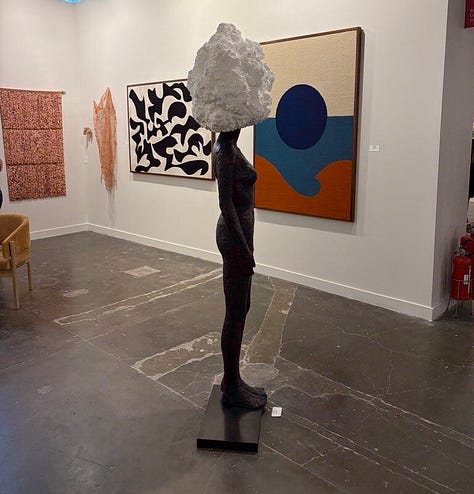
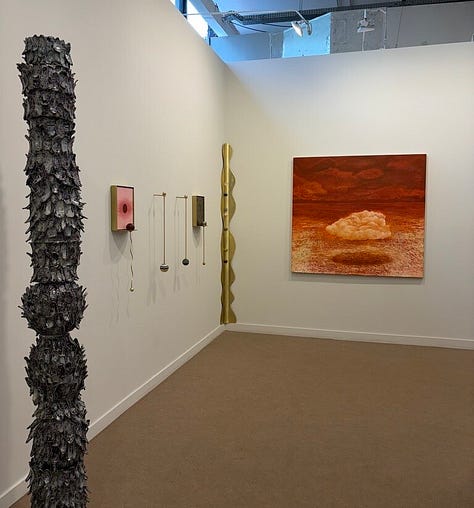
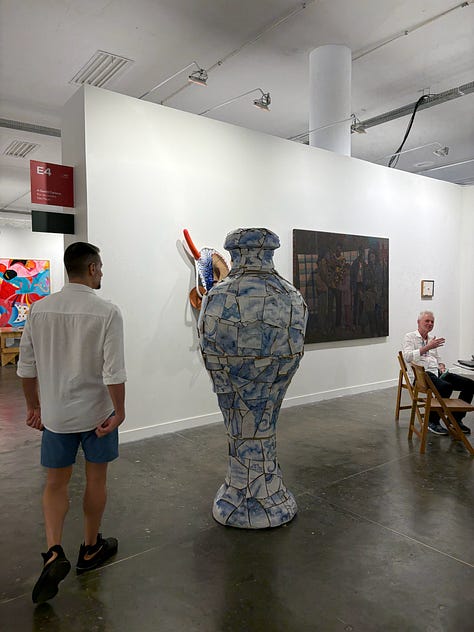
The Architectural Rite
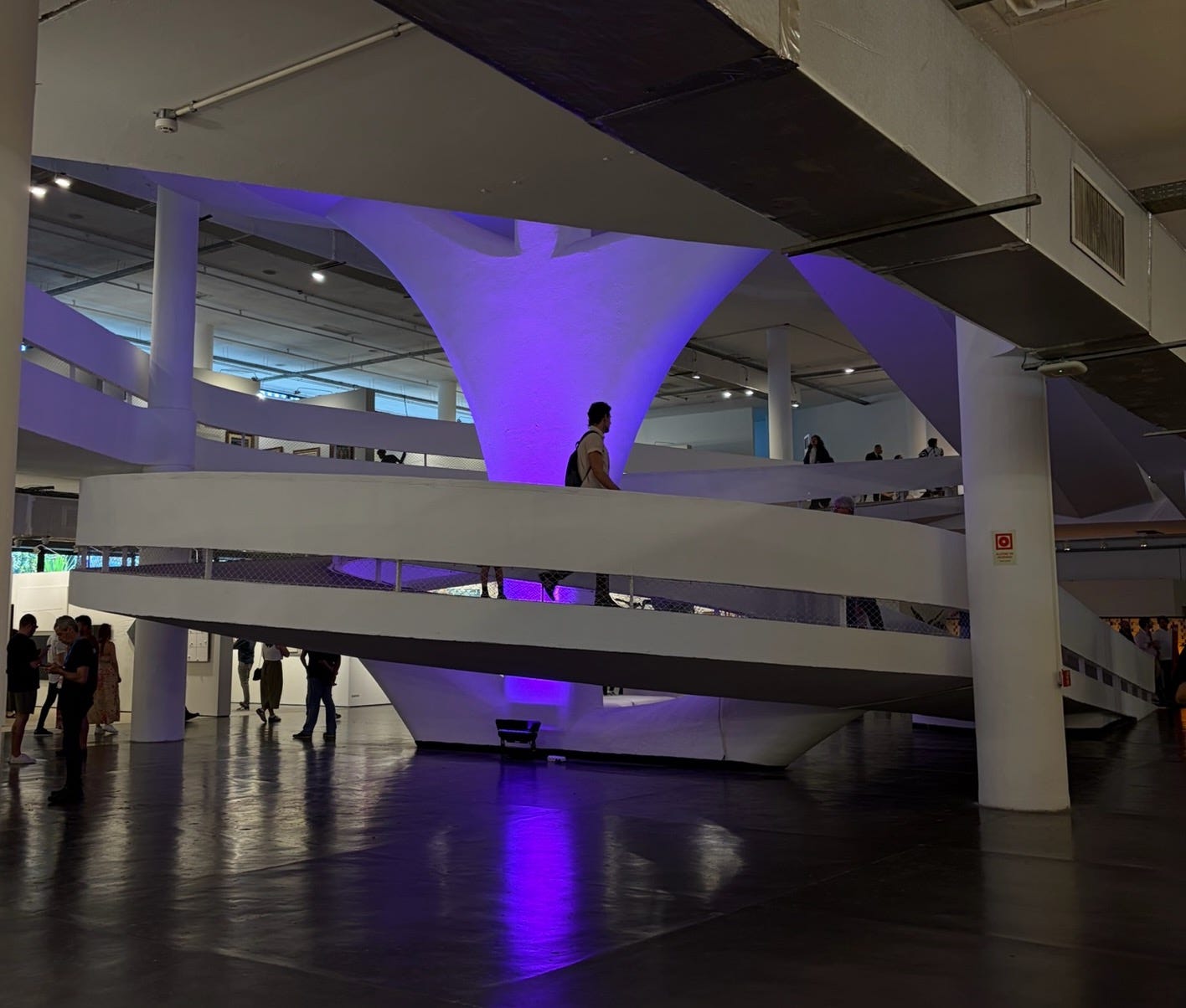
The Pavilhão da Bienal is definitely not a neutral space. Designed by Oscar Niemeyer in 1954 for São Paulo’s IV Centenary, it sits inside Ibirapuera Park like a concrete giant holding its breath. To walk it is to experience a constant, shimmering duality: the rigid authority of the modernist concrete curves versus the organic, untameable green of the park bleeding through the glass. Inside, for five days a year, this landmark becomes the heart of SP-Arte.
Now in its 22nd year, the fair has become a ritual for art enthusiasts. But walking these corridors isn’t just about the market. It’s a journey of sensory friction. You are surrounded by the legacy of Brazilian modernism, the very building a manifesto, while navigating a sea of works that range from the deeply familiar to the new. You pass a Volpi that feels like nostalgia, then a Calder that feels like a global echo, and then you are stopped cold by a contemporary voice you’ve never heard before and are instantly drawn to.
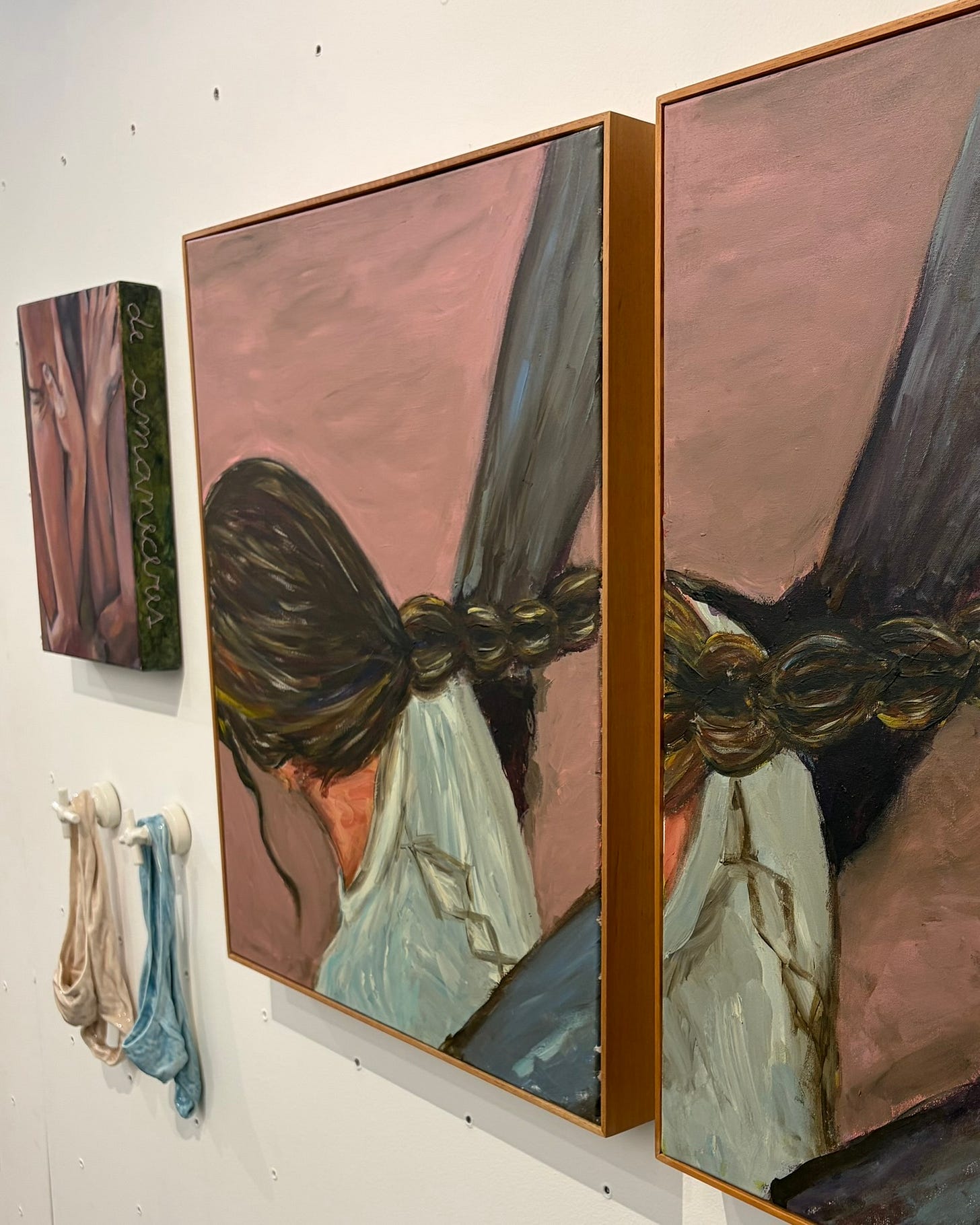
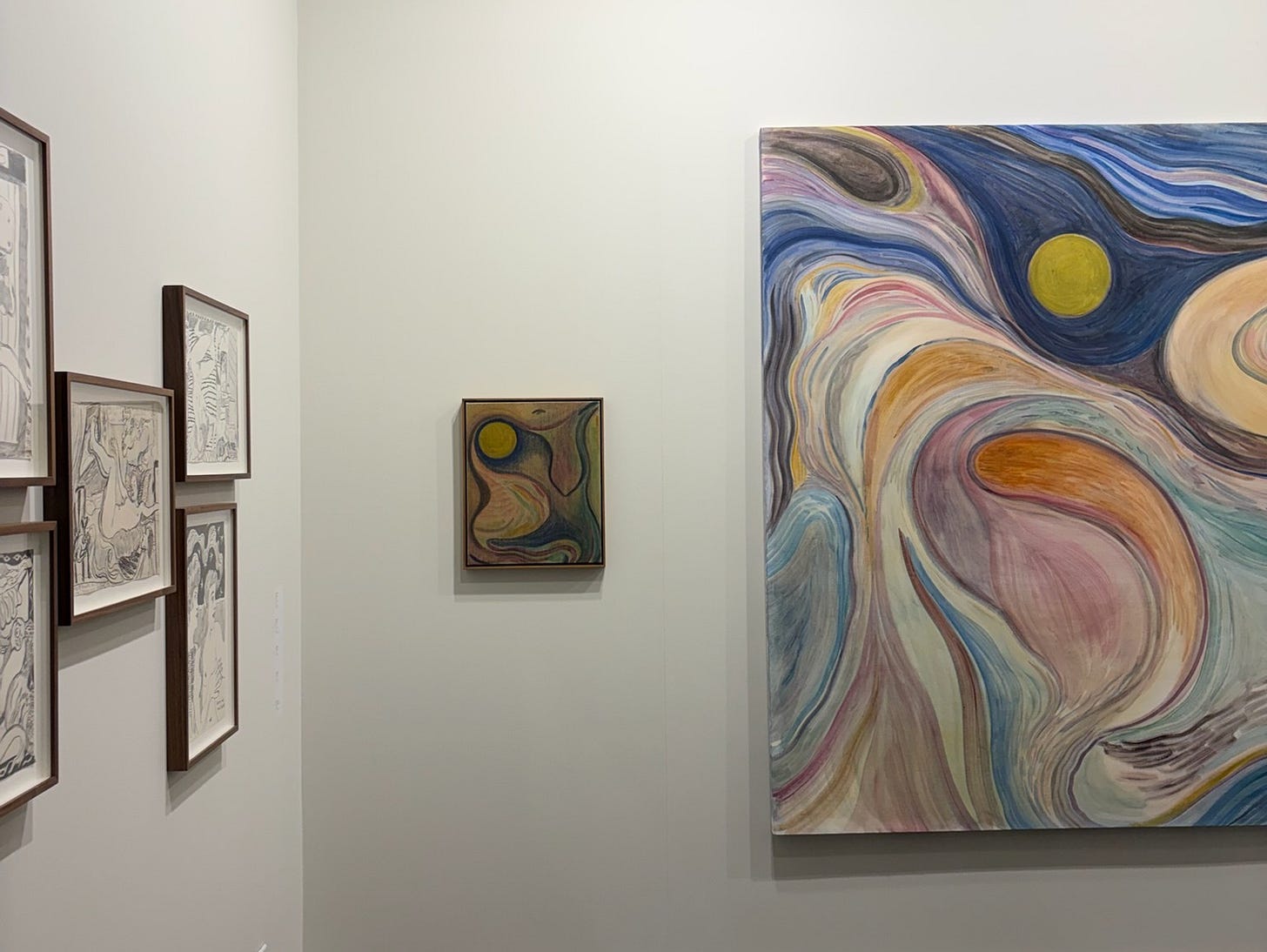
Elvira Freitas Lira in show at SP-Arte
Subverting Struggles
There is a specific delicacy in discussing art and cultural capital in a country like Brazil. We are a nation of profound inequalities, where intellectual capital is often treated as a luxury good rather than a birthright. In the context of a high-end art fair, this tension is always present, humming quietly. You can see it in the work itself.
The most striking thing about Brazilian art is often how much is made with so little. We have a long and prolific history of artists who turned scarcity into a language. They didn’t have heavy subsidies; they had raw materials, urgent themes, and an almost spiritual resourcefulness.
When you see a work by Leonilson you aren’t just looking at aesthetics. You are looking at a breakthrough. An artist who managed to pierce through the bubble, crossing generations, social strata, and international borders, not because they had the most resources, but because their work was load-bearing. It carried the weight of a reality that couldn’t be ignored. This is what the global market is finally beginning to see: that the Brazilian soul in art isn’t about tropical motifs. It’s about the power of a narrative that survives the struggle.
The Labor of Access
There is another side to the room, one of legacy and deep-rooted access. Many of Brazil’s most celebrated artists emerged from positions of social privilege, born into environments where cultural capital was the dinner table conversation. But privilege, in the hands of a true artist, is not a resting place; it is a tool.
There are artists who understood, early on, that their access to world-class education and private archives was a responsibility. They didn’t just make art; they built visual systems through years of obsessive research and refined intentionality. They used their position to look closer, to dig deeper into the history of materials, and to bridge the gap between European tradition and the raw, complex pulse of Brazil.
In a fair as vast as this, you begin to distinguish between those who are simply performing their status and those who are utilizing it to push the boundary of what art can do. The latter creates work that transcends its own origin. They prove that while the starting point matters, the intentionality of the journey is what ultimately makes the work endure.
A Fixed Point
As you exit the pavilion, one thing remains clear: Brazil is no longer a peripheral conversation. It is a destination that must be taken seriously on the global stage. Whether the work comes from a place of scarcity or a place of research, the result is the same: it is an anchor. Art that has been tested by reality and refined by a unique cultural intelligence.
The collector walking these ramps isn’t just discovering a local scene. They are engaging with a global powerhouse. The Brazilian art scene isn’t just surviving the modern moment, it is helping define it.
Júlia Mello Chiaradia is a writer and art world professional based in São Paulo, Brazil, and a member of the Lion & Lamb team. Her work sits at the intersection of cultural criticism and market intelligence, with a particular focus on Latin American art and its growing presence on the global stage.
Lion & Lamb is a Philadelphia-based gallery and creative agency representing artists, advising collectors, and publishing independent editorial about the art world as it operates. If this resonated, the Salon is where the deeper conversation lives.